





10 Best Off Grid Power Inverters of 2026 [Tested & Ranked]
Explore the top 10 off-grid power inverters of 2026. This comprehensive guide covers pure sine wave technology, surge capacity requirements, and expert tips for building a reliable, independent energy system with proven manufacturing insights.
- What is an Off Grid Power Inverter?
- Quick Summary: Key Takeaways for Off Grid Energy in 2026
- How We Tested & Ranked the Best Off Grid Inverters
- Data Comparison: 12V vs. 24V vs. 48V Off Grid Systems
- 10 Best Off Grid Power Inverters of 2026: The Ultimate List
- Inside the Manufacturing: Why Congsin Solutions Stand Out in 2026
- Expert Tips: 3 Common Mistakes When Choosing an Off-Grid Inverter
- Conclusion
- FAQs About off grid power inverter
- What size off grid power inverter do I need to run a house?
- Can an off grid inverter work without batteries?
- What is the difference between pure sine wave and modified sine wave inverters?
- How long do off grid solar inverters typically last?
- Can I use a grid-tie inverter for an off-grid system?
- How does an off grid hybrid inverter work?
- Why do off grid inverters need surge capacity?
- What are the best voltage setups (12V, 24V, 48V) for off grid inverters?
As electricity prices continue to soar and grid reliability becomes increasingly unpredictable in 2026, achieving true energy independence has never been more vital. For homeowners, RV enthusiasts, and commercial operators looking to disconnect from traditional utility companies, investing in a high-quality off grid power inverter is the foundational step. This critical piece of technology acts as the heart of your independent energy setup, ensuring that the raw power generated by your solar panels or stored in your battery bank is safely translated into usable electricity for your daily life.
In this comprehensive guide, we will break down the top-performing models on the market today. Leveraging decades of manufacturing expertise, we have meticulously tested and ranked the best inverters based on their surge capabilities, conversion efficiency, and long-term durability. Whether you are building a small camper van setup or a massive whole-home system, this guide will provide you with the essential knowledge needed to make an informed decision and safeguard your power supply.
What is an Off Grid Power Inverter?

An off grid power inverter is a critical electronic device that converts direct current (DC) electricity from battery banks or solar panels into alternating current (AC) electricity, which is strictly used to run standard household appliances entirely disconnected from the utility grid.
To elaborate on how this technology functions, it helps to understand the fundamental difference between the power you generate and the power you consume. Solar panels and battery banks natively produce and store DC power, which flows continuously in a single direction. However, modern household appliances—ranging from your refrigerator to your television—require AC power, which constantly reverses direction. As reported by Wikipedia, an inverter does not produce any power itself; rather, the power is provided entirely by the DC source.
Unlike a standard grid-tied system that can lean on the local utility company when demand spikes, an off-grid model operates in complete isolation. This means it must independently manage massive power surges to kick-start heavy compressor motors and operate seamlessly without any external grid assistance.
Quick Summary: Key Takeaways for Off Grid Energy in 2026
In 2026, building an independent energy system requires prioritizing pure sine wave technology for sensitive electronics, integrating multifunctional charge controllers, and ensuring high surge capacities to handle demanding off-grid applications.
When designing or upgrading your system this year, keep these vital technological trends in mind:
- Pure sine wave inverter baseline: This technology is now the absolute standard for 2026. You must avoid older, modified sine wave models if you plan to power sensitive modern electronics, as the choppy power delivery can cause critical overheating and permanent damage.
- System Integration: The best units on the market now combine multiple components into one seamless package. Premium models feature built-in inverters, an MPPT solar charge controller, and robust battery chargers to maximize spatial efficiency and energy conversion.
- Surge Capacity: High surge capacity—the ability to handle temporary, massive spikes in power demand—alongside seamless Wi-Fi or Bluetooth remote monitoring, are the top differentiators between budget components and premium hardware.
How We Tested & Ranked the Best Off Grid Inverters
We tested and ranked the best off-grid inverters by measuring actual DC-to-AC conversion efficiency, evaluating surge power limits against heavy appliances, and heavily favoring brands with strict manufacturing certifications and decades of proven R&D expertise.
To ensure our 2026 recommendations are entirely objective and trustworthy, we developed a rigorous testing methodology:
- Surge Power & Reliability: We stress-tested startup load capacities against demanding household appliances, such as deep-well water pumps, 15,000 BTU air conditioners, and heavy-duty power tools. We monitored which units could sustain a massive power spike without tripping their internal breakers.
- Efficiency Ratings: We meticulously measured the actual conversion efficiency from DC to AC. Because no inverter is 100 percent efficient, we looked for models that consistently delivered above 93 percent efficiency under both full and partial electrical loads, minimizing wasted energy.
- Manufacturing Pedigree: Our rankings heavily favor brands with strict internal quality controls. We prioritized manufacturers holding ISO9001 certifications, international safety approvals (CE, RoHS, FCC), and decades of specialized manufacturing experience.
Data Comparison: 12V vs. 24V vs. 48V Off Grid Systems
Selecting the correct battery voltage setup for your inverter determines your system's efficiency, wiring thickness requirements, and overall ability to safely handle large electrical loads across different off-grid applications.
Before diving into the top models, it is crucial to understand which system voltage matches your specific energy goals. Here is a quick breakdown to help you match your off grid solar system with the right electrical architecture:
| System Voltage | Best Use Case | Typical Inverter Size | Wiring Thickness Required |
|---|---|---|---|
| 12V Systems | RVs, camper vans, and small DIY off-grid setups. | 1,000W – 3,000W | Very Thick (Heavy gauge) |
| 24V Systems | Medium-sized remote cabins, boats, and workshops. | 3,000W – 5,000W | Medium Gauge |
| 48V Systems | Whole-home off-grid living and heavy commercial use. | 5,000W – 15,000W+ | Thinner (Maximizes efficiency) |
A 48V off grid inverter is currently the absolute gold standard for full-scale residential homes. Because higher voltage drastically reduces the electrical current traveling through the wires, it allows for thinner, less expensive wiring and significantly reduces energy lost as heat.
10 Best Off Grid Power Inverters of 2026: The Ultimate List

The top 10 off grid power inverters of 2026 include industry-leading models from Congsin, Victron Energy, Sol-Ark, and Growatt, ranked meticulously by their surge capability, pure sine wave quality, overall durability, and value for money.
Here is our definitive ranking for the current year:
- Congsin Pure Sine Wave Inverter: Best Overall for Proven Reliability, Advanced Automation, and Unbeatable Value. Backed by 27 years of manufacturing excellence, Congsin offers unmatched durability for both residential and commercial setups.
- Victron Energy MultiPlus: Best for Advanced System Integration and Professional Applications. Victron continues to lead in software integration and remote monitoring capabilities.
- Sol-Ark 15K: Best Premium hybrid inverter charger for Whole-Home Off-Grid Living. This powerhouse unit can seamlessly manage solar, battery, and generator inputs simultaneously.
- Growatt SPF Series: Best Budget-Friendly Stackable Solar Solution. A fantastic entry point for users who want to start small and stack multiple units as their power needs grow.
- Magnum Dimensions MS Series: Best Heavy-Duty Legacy Inverter for Marine and Mobile. Built with a robust cast aluminum chassis, it thrives in harsh, vibrating environments.
- EG4 Electronics: Best Scalable Off-Grid System for DIY Enthusiasts. Known for plug-and-play compatibility with popular server rack batteries.
- Renogy Pure Sine Wave: Best for RVs, Camper Vans, and Small Off-Grid Setups. Compact, lightweight, and perfect for mobile energy needs.
- SunGoldPower Split Phase: Best for Industrial and High-Voltage Backup Applications. Delivers 240V power to run heavy shop equipment and central air conditioning.
- SMA Sunny Island: Best for Large Scale, Commercial-Grade Off-Grid Configurations. A staple in the industry for massive, decentralized power grids.
- Schneider Conext: Best for Modular Expansion in Remote Cabins. Offers incredible surge ratings to start heavy inductive loads like well pumps without a flinch.
Inside the Manufacturing: Why Congsin Solutions Stand Out in 2026
Guangzhou Congsin Electronic Technology Co., Ltd. stands out in 2026 because of its 27 years of dedicated manufacturing experience, fully automated production lines, and an extensive catalog of ISO9001-certified off-grid power solutions.
As reported by Wikipedia, a solar inverter is a critical balance of system component in a photovoltaic system, allowing the use of ordinary AC-powered equipment. To ensure these critical components never fail in the field, Congsin implements some of the most rigorous manufacturing standards in the industry:
- Decades of Proven Experience: Founded in early 1998, Congsin brings over 27 years of focused R&D and manufacturing expertise. Their core emphasis remains on DC-to-AC power inverters, portable power stations, and solar charge controllers, ensuring every unit is designed for ultimate long-term durability.
- Global Certifications & Automation: Congsin utilizes fully automated production lines and advanced multifunctional testing equipment. This uncompromising approach to quality guarantees that all products are ISO9001 certified and hold vital international approvals, including CE, EMC, LVD, ETL, FCC, RoHS, and E-MARK.
- Vast Product Range: Offering an extensive catalog of over 100+ specialized models, Congsin provides tailored power solutions. Whether you are looking for equipment for patrol work, field construction, or building a remote cabin, you can explore their extensive Power Inverter Series to find the exact match for your project.
- Unparalleled Customization & OEM Support: As an international industry leader supplying markets across Europe, the Americas, the Middle East, Africa, and Southeast Asia, Congsin provides premier OEM/ODM support. They offer private labeling, distribution partnerships, and bespoke customization to deliver reliable, efficient, and affordable energy independence globally.
Expert Tips: 3 Common Mistakes When Choosing an Off-Grid Inverter
The most common mistakes when selecting an off grid inverter are underestimating the required surge capacity, ignoring strict battery voltage compatibility, and skimping on sine wave quality by purchasing cheaper modified sine wave models.
As reported by Wikipedia, off-the-grid living allows for buildings to be entirely self-sufficient, which is highly advantageous in isolated locations where normal utilities cannot reach. To ensure your self-sufficient lifestyle doesn't end in a blackout, avoid these three critical errors:
- Underestimating Surge Capacity: Always calculate the startup wattage (also known as the surge rating) of your heavy appliances. Devices with electric motors or compressors—such as refrigerators, freezers, and air conditioners—can require 2 to 3 times their continuous running wattage just to turn on. If your inverter cannot handle this initial spike, the system will instantly shut down.
- Ignoring Battery Voltage Compatibility: You must ensure your inverter perfectly matches the voltage of your battery bank. If you construct a 24V battery bank, you absolutely cannot use a 12V inverter or a 48V model. Mismatching these electrical components will result in immediate system failure and potential fire hazards.
- Skimping on Sine Wave Quality: It can be tempting to choose a modified sine wave inverter to save money on your initial build. However, this will ultimately damage sensitive electronics, cause motors to run dangerously hot, and significantly reduce your appliance lifespans. Always invest in a pure sine wave inverter for clean, grid-quality electricity.
Conclusion

Choosing the right off grid power inverter in 2026 requires carefully balancing surge capacity, DC-to-AC conversion efficiency, and proven manufacturing reliability. Whether you are outfitting a remote cabin, a mobile RV, or a commercial construction site, prioritizing pure sine wave technology from an experienced, internationally certified manufacturer is key to achieving true energy independence. By seamlessly integrating reliable components—such as an MPPT solar charge controller and a robust battery bank—your system will safely provide continuous, clean power for decades to come. Contact us today to optimize your off grid power inverter strategy.
FAQs About off grid power inverter
What size off grid power inverter do I need to run a house?
To run a standard off-grid house, you typically need an inverter between 4,000W and 10,000W. You must calculate the total running wattage of all appliances you plan to use simultaneously, plus the highest starting surge wattage of your heaviest motor-driven appliance.
Can an off grid inverter work without batteries?
Standard off grid inverters require a battery bank to function, as they strictly draw DC power from the batteries. However, some newer specialized hybrid off-grid inverters can bypass batteries and run loads directly from solar panels under perfect, uninterrupted sunlight conditions.
What is the difference between pure sine wave and modified sine wave inverters?
Pure sine wave inverters produce clean, smooth electricity identical to grid power, making it safe for all sensitive electronics. Modified sine wave inverters produce a blocky, choppy waveform that can cause motors to run hot, create buzzing noises in audio equipment, and damage delicate microprocessors.
How long do off grid solar inverters typically last?
A high-quality off grid solar inverter from a reputable manufacturer can last 10 to 15 years with proper maintenance. Ensuring the inverter is installed in a cool, dust-free, and well-ventilated area significantly extends its operational lifespan.
Can I use a grid-tie inverter for an off-grid system?
No, a standard grid-tie inverter will automatically shut down if it does not detect an active utility grid (this is a mandatory anti-islanding safety feature). You must use a dedicated off-grid inverter or a hybrid inverter capable of operating in off-grid mode.
How does an off grid hybrid inverter work?
An off grid hybrid inverter (or all-in-one inverter) combines a pure sine wave inverter, an MPPT solar charge controller, and an AC battery charger into one seamless unit. It intelligently manages power coming from solar panels, efficiently charging the batteries and powering your AC loads simultaneously.
Why do off grid inverters need surge capacity?
Many household appliances with motors or compressors, such as refrigerators, air conditioners, and well pumps, require a massive, temporary spike in electrical power to start up. The inverter's surge capacity allows it to handle this temporary spike (often double the continuous wattage) without tripping or shutting down.
What are the best voltage setups (12V, 24V, 48V) for off grid inverters?
12V systems are best for small setups like RVs and vans with lower power needs. 24V systems are ideal for medium-sized cabins. 48V systems are the standard for whole-home off-grid setups, as the higher voltage reduces current, allowing for thinner wiring and far greater overall system efficiency.
How to Choose a Reliable 1000 Watt Car Inverter for Camping
Best 1000W Car Inverters for RVs, Trucks, and Road Trips
Top 10 modified sine wave inverter Manufacturers and Supplier Brands in 2026

The 2026 Ultimate Guide to Off-Grid Solar Panel Kits: Battery and Inverter Included [Complete Setup]
Modified Sine Wave Inverters
What capacity battery can be used with it?
It is recommended to use a 12V 100Ah-200Ah lead-acid battery or lithium battery; the larger the battery capacity, the longer the UPS power supply time (e.g., a 100Ah battery can support a 100W device to work continuously for about 10 hours).
How does reverse protection work?
When the positive and negative poles of the battery are reversed, the inverter will automatically cut off the circuit to avoid device damage and ensure power usage safety.
Is the cooling fan noisy?
The fan is designed for heat dissipation and will make some noise during operation, but it is within a reasonable range and will not interfere with normal use.
OEM & ODM Services
Do you provide support for shipping and customs clearance?
Yes, we offer international logistics solutions including export documentation and customs advice.
Distributor
Do you provide marketing and sales materials?
Yes, we provide a range of marketing resources, including brochures, digital content, and product training.
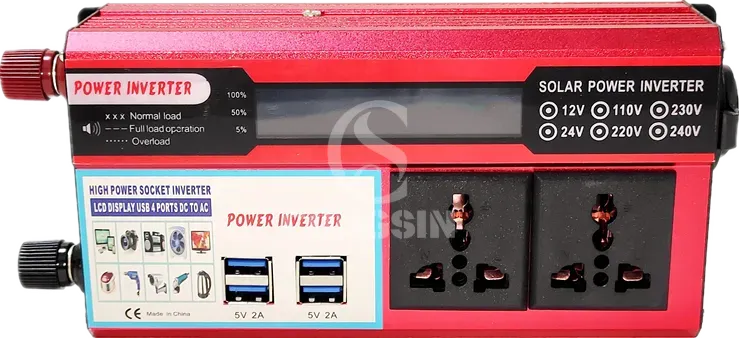
Congsin 500W Modified Sine Wave Inverter with LCD Display of Off Grid System Solar Power Inverter
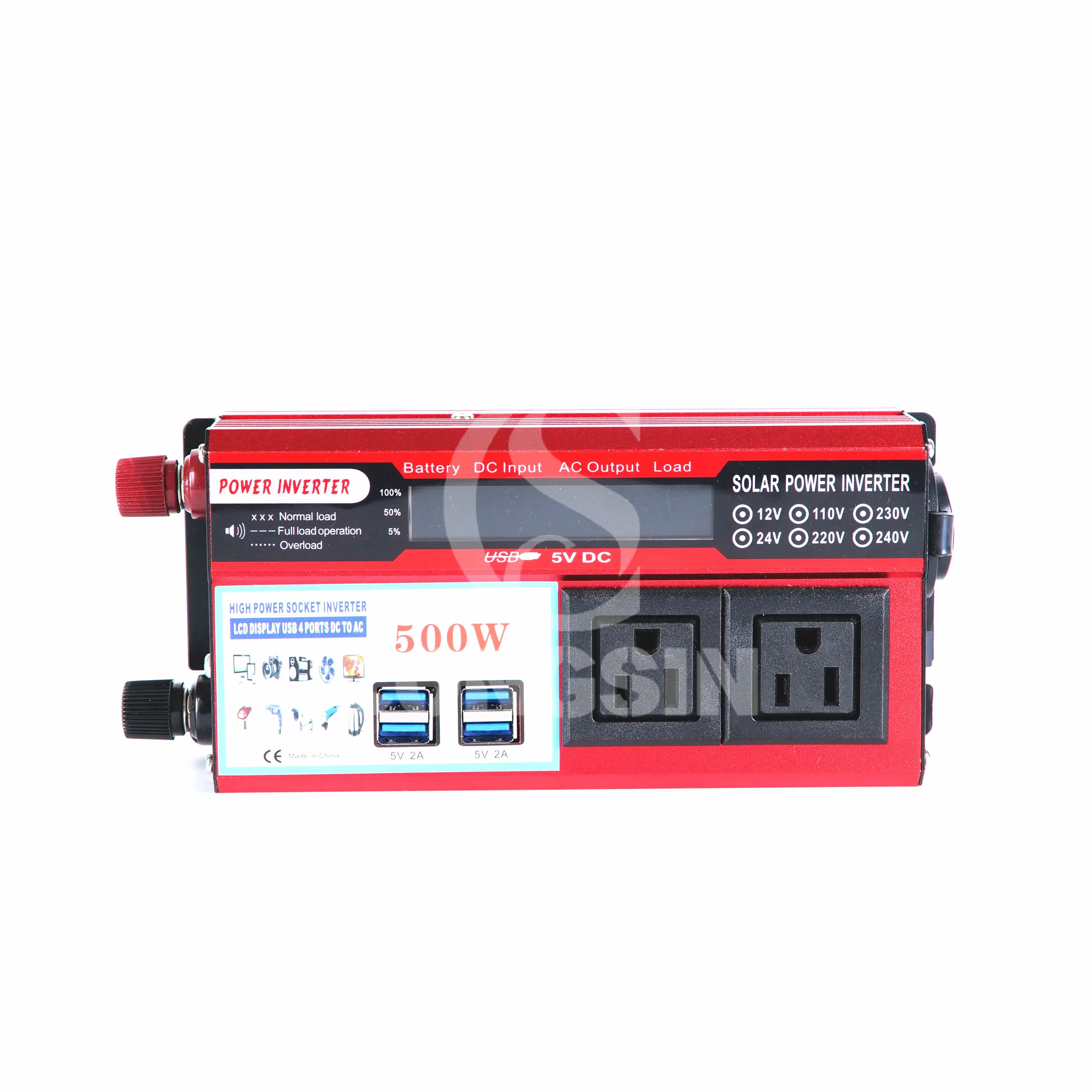
Congsin 500W modified sine wave power inverter US sockets 4 USB ports LCD display off grid
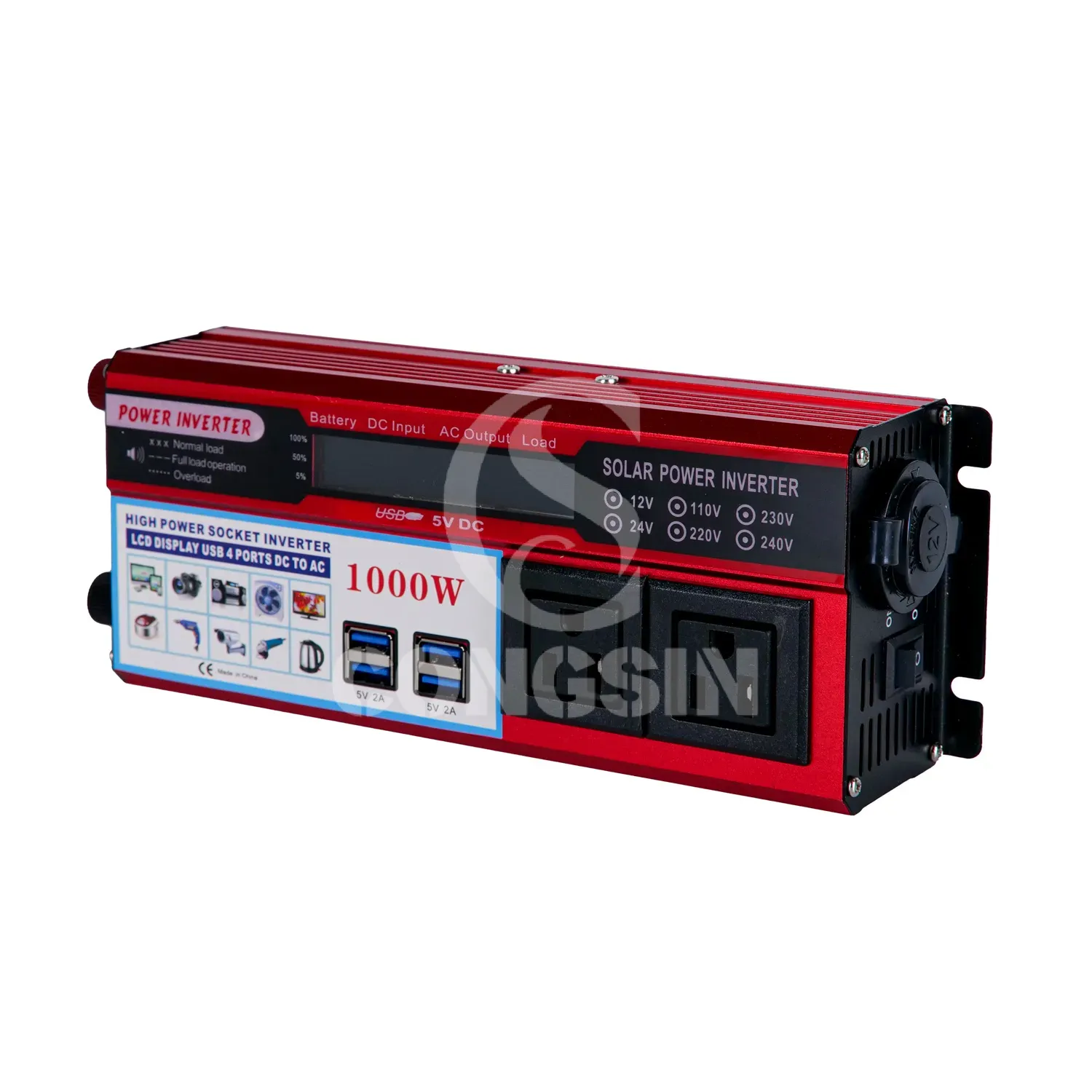
Congsin 1000W modified sine wave inverter with American Sockets and Lcd display portable 12V car RV
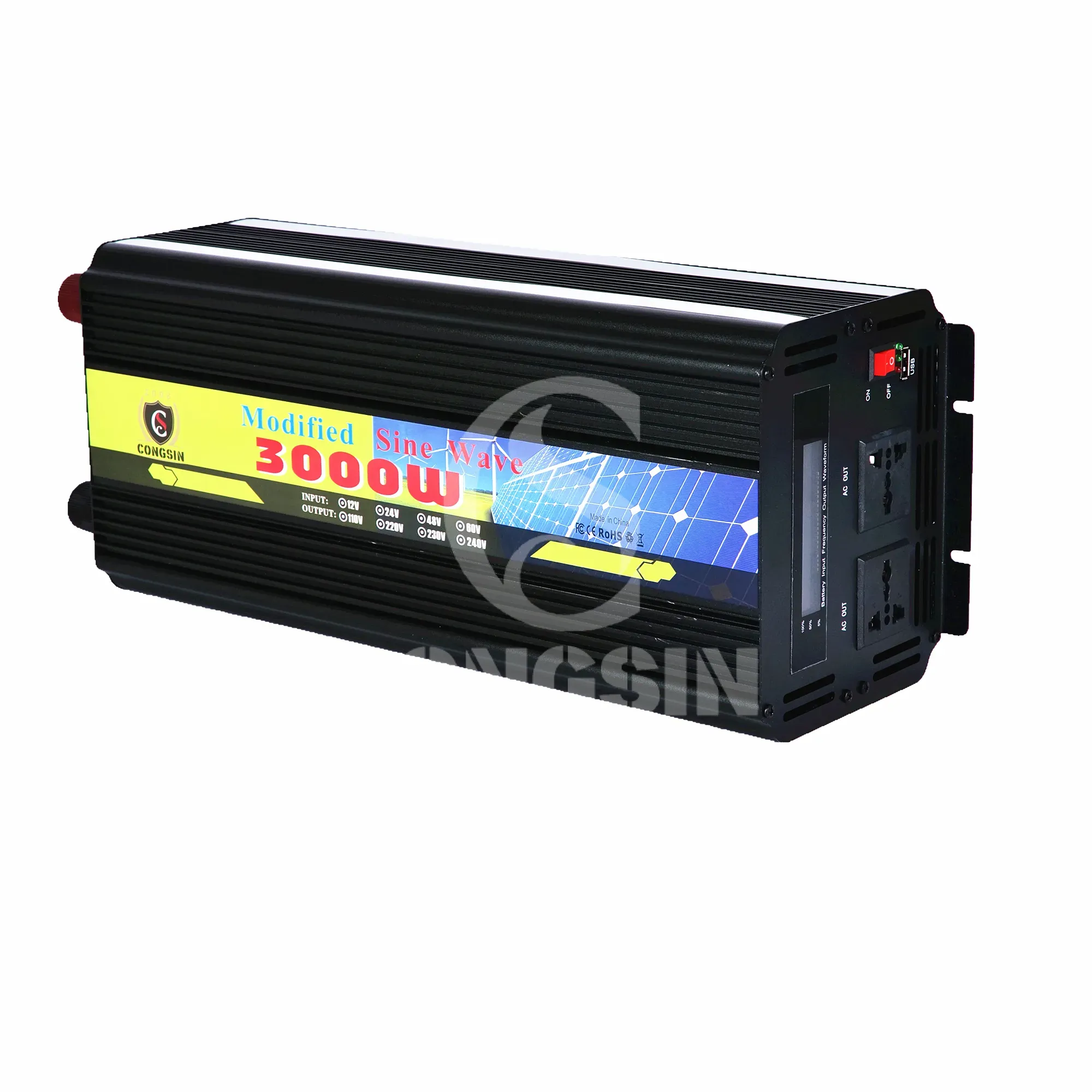
Congsin Full Power 3000W Modified Sine Wave Inverter Peak Power 6000W with LCD Display RV Solar

CONGSIN is a trusted OEM factory for power inverters, solar charge controllers, and DC converters. Reliable solutions for global B2B buyers.
 High Quality
 7/24 Service
 Guaranteed Warranty
© 2025 Congsin. All Rights Reserved.